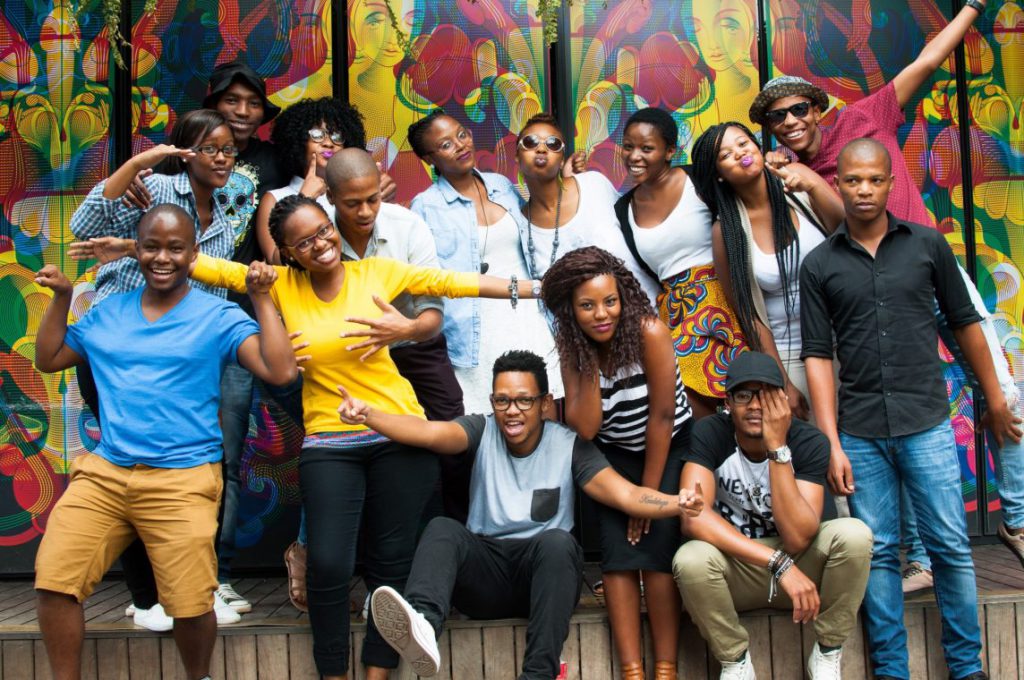
STRENGTHS-BASED LEADERSHIP: LEAD WITH WHAT ENERGIZES YOU
In today’s fast-paced world, leaders are under pressure to do more, faster.
But here’s a secret: focusing on weaknesses drains energy — leveraging strengths ignites it. ⚡
Why Strengths Matter
People thrive where their talents naturally shine. Marcus Buckingham says it best:
“Your strength is not what you’re good at; it’s what energizes you.”
Instead of fixing weaknesses, leaders who focus on strengths create engaged, high-performing teams.
Lessons from the Pros
Take Satya Nadella, CEO of Microsoft. He transformed a “know-it-all” culture into a “learn-it-all” one — nurturing curiosity, creativity and collaboration.
The result? Innovation soared, morale lifted and the company’s energy was palpable. 🚀
Introverts Can Excel in Sales Too
Research highlights introverts’ unique superpowers in sales. Matthew Pollard explains:
“An extrovert’s ability to sell is hugely based on their mood … For an introvert … the variability disappears.
They just run the system … and it delivers predictable results.”
Introverts thrive when their analytical skills, empathy and preparation are leveraged — proving that strengths-based leadership works across all personality types.
The Ripple Effect
Strengths-Based Leadership isn’t just a method — it’s a mindset. It turns sparks into flames, passion into performance and teams into powerhouses. 🔥
Start Today
💪 Discover your strengths — and your team’s. Align roles with natural talents. Lead with energy. Watch engagement, confidence and results skyrocket.
How Generational Differences Are Reshaping Leadership in Today’s Workplace
Introduction
Leadership is not what it used to be – and that’s a good thing.
Today’s workplaces are filled with a vibrant mix of Baby Boomers, Gen Xers, Millennials and the rising force of Gen Z.
Each generation brings its own worldview, work ethic and expectations – and together, they’re reshaping leadership in powerful, exciting ways.
Gone are the days of command-and-control leadership styles.
In their place? A more dynamic, collaborative and emotionally intelligent approach that reflects the diversity of generational values in today’s workforce.
In this post we’ll look at how different generations execute leadership. These are the Baby Boomers, Gen X, Millennials and Gen Z.
So, let’s get started.
Boomers and Gen X: The Pillars of Experience
Baby Boomers and Gen Xers still hold many top leadership positions.
Their approach is often rooted in structure, discipline and performance-driven results.
They value loyalty, long-term planning and a “get it done” mindset.
Their leadership style tends to be steady, reliable and deeply strategic.
Think of them as the anchors, offering stability continuity and decades of institutional wisdom.
Guess what?
They have not buried their heads in the sand.
They are adapting to change.
Faced with a workforce that craves flexibility, purpose and transparency, seasoned leaders are learning to communicate more openly, embrace digital tools and foster cultures of inclusion.
They have realised that: He who rejects change is the architect of decay. – Harold Wilson
Millennials: The Purpose-Driven Trailblazers
As for Millennials, who are now well into their 30s and 40s, they are increasingly stepping into leadership roles.
Raised in a digital world and shaped by economic instability and social movements, they lead with heart and vision.
They value authenticity, collaboration and a strong sense of purpose.
For Millennials, leadership isn’t about authority.
No, it’s about influence.
They inspire teams by sharing powerful stories, championing causes and creating spaces where people feel seen, heard and valued. Their leadership is emotionally compelling and deeply human.
Gen Z: The Bold Disruptors
Gen Z step onto the blazing arena with boldness.
They are tech-savvy, outspoken, and unafraid to challenge the status quo.
They’re not waiting for their turn to lead; they’re already doing it.
Whether it’s launching social impact startups, speaking up on global issues, or redefining hustle culture, Gen Z demands a leadership style that is energetic, inclusive, and guided by integrity and strong values.
They crave leaders who are transparent, empathetic, and driven by visible outcomes – no noise, just impact.
They bring a fresh urgency to leadership: one that is not only fast-paced, globally minded, and boldly innovative but delivers results.
Generational Bold Shifts Across Africa
Across Africa, generational shifts are transforming leadership.
In Uganda, Sherifah Tumusiime leads Zimba Women with a purpose-driven, tech-savvy approach, mentoring across age lines.
In South Africa, 26-year-old Mikaeel Moti co-leads the Moti Group with a Gen X CEO.
This is quite refreshing, blending bold innovation with seasoned strategy.
In Kenya, Gen Z entrepreneurs, supported by Kenya Private Sector Alliance (KEPSA) and Ajira Digital, are shaping national economic conversations.
In Botswana, Naledi Magowe, a Gen Z, co-founded Brastorne.
It’s work focuses on closing the digital divide in rural Africa by delivering mobile connectivity and information access to underserved communities, and what’s more, it’s steered by at least 70% Gen Z talent at the top level.
These stories reveal a powerful truth: leadership is no longer about age – it’s about vision, adaptability, and cross-generational collaboration. Each generation has value to bring to the table.
Bridging the Generational Divide
So how do we lead across generations?
By embracing adaptive leadership such as by listening actively, learning constantly, and stretching our style to connect with diverse mindsets.
We must shake off rigidity and embrace different ways of doing things.
It’s about blending the resilience of Boomers, the pragmatism of Gen X, the passion of Millennials, and the disruptive spirit of Gen Z.
Leadership today is no longer a title, not even the position but the voice, values and vigour.
It’s an evolving conversation. And those who lead well are the ones who listen well, change fast, and build bridges across generations.
The future belongs to those who can lead with wisdom, empathy and a pulse on the times.
This is because every generation adds its own flavour.
Whether it’s seasoned tenacity, youthful fire or sharp clarity, together they create the powerful blend that defines leadership today.
Let this be a trigger to change your mind set on the generational differences in leadership styles.
“Great leaders build bridges between generations, turning difference into direction and diversity into strength.”
— Adapted from John C. Maxwell
Thanks for reading. Please share your views or comments.
Women Leaders Are Burning Out – Africa Cannot Afford to Look Away
Across Africa, we celebrate women who “hold it all together.”
The CEO who outperforms targets.
The principal secretary who works past midnight.
The NGO director who carries it all on her shoulders. The same
shoulders carry the donors, staff, communities, and the home.
But the latest McKinsey–Lean In report reveals an uncomfortable truth: women at the top are exhausted and burned out.
Not because they are weak , but because leadership systems are quietly draining them.
For African organizations, this is not just a gender issue.
It is a leadership sustainability issue.
Here are five leadership lessons African boards, CEOs and public-sector leaders must urgently confront.
We Praise Endurance Instead of Fixing Systems
In many Kenyan and African workplaces, long hours are worn like a badge of honour.
The leader who never rests is admired. The one who asks for support is questioned and their competence doubted.
Yet women leaders often carry extra, invisible work ranging from mentoring younger staff, managing emotions, to advancing inclusion, all these with little or no recognition.
Lesson:
Endurance is not excellence. Sustainable leadership requires systems that share the load, not heroes who carry it alone.
2. Representation Without Real Power Is a Trap
Research on tokenism finds that women in minority leadership positions are visible but isolated
Consequently, they may face higher performance pressures, less access to informal networks, and fewer opportunities to influence outcomes, compared with environments where women are genuinely integrated into authority structures.
There are some organizations which proudly showcase women in leadership roles, yet deny them real authority, budgets or decision-making space.
This creates pressure without power and visibility without voice.
Lesson:
Representation must come with resources, respect and real influence. Otherwise, leadership becomes theatrical, making burnout inevitable.
Flexibility Is Critical in African Leadership Realities
Many women leaders balance demanding roles with caregiving, extended family responsibilities, and community expectations.
To make it worse, all is done within economies that already stretch time and energy thin.
Lesson:
Flexible work is not a luxury. In African contexts, it is a leadership enabler that retains talent and protects performance.
4. Burnout at the Top Weakens Institutions
An exhausted leader leads with survival, not vision. Meetings feel heavier.
Decisions slow. Teams disengage.
We often ask, “Why is morale low?”
Sometimes the answer is simple: the leaders are depleted.
Lesson:
Leader well-being is an institutional risk issue and not a personal weakness.
5. Resilience Should Not Be the Price of Leadership
In some set ups, women leaders are often told, “You are strong.”
Whilst this should motivate the leader to soldier on, in some instances, it has been used to stretch the leader beyond bearable limits.
Sooner or later, they realise that strength without support becomes silent punishment.
Lesson:
The future of leadership is not tougher women. It is smarter governance, humane cultures, and respectful workloads.
Conclusion
Africa is investing heavily in leadership development, ethics, and governance – and rightly so.
However, we must ask a harder question:
What kind of leaders are our systems producing, and at what cost?
If women at the top are burning out, then leadership itself needs redesigning.
Because when leaders thrive, institutions thrive.
And Africa cannot afford to lose its most capable leaders to quiet exhaustion.
“Burnout is contagious. When leaders are depleted, disengagement and dysfunction cascade throughout the organization.”
Leadership and Football: 5 Fearless Lessons for High-Performance Teams
Leadership and football share a powerful truth: winning requires strategy, stamina and strong team culture. On the pitch or in the boardroom, champions rise when leaders use smart decision-making, emotional intelligence and unstoppable teamwork. Here are 5 bold lessons where leadership meets the vibrant game. If you are a leader, you don’t want to miss this.
Here are 5 powerful lessons drawn from the popular game:
Vision Beats Velocity
Great footballers don’t just dash forward. They see the field. Picture Andrés Iniesta scanning the stadium, reading movement like a master conductor. Effective leadership works the same. Strategic leadership means anticipating problems, spotting opportunities and steering high-performance teams with clear vision. As a leader, this requires that you take the time to understand the game and anticipate events. You must master your game.
Communication Creates Champions
Kylian Mbappé may be known for his explosive speed, but his real strength lies in how he reads teammates, signals plays, and synchronizes movement in seconds. Watch him on the field! Notice the quick nods, sharp gestures and instant eye contact? His communication is fast, fluid and fearless. Leaders who communicate with clarity build trust, boost productivity and strengthen team culture. And of course you must always remember that communication is two-way. “To listen well, is as powerful a means of influence as to talk well.” – John Marshall
Pressure Produces Power Plays
The stadium shakes, the crowd roars, and everything is on the line. Think of Didier Drogba’s electric, pressure-filled 2012 Champions League performance. Great leadership means staying calm, confident and courageous when stakes are high. Even when everything around you suggests that you should give up, do not give in to this ploy. The secret is in turning stress into smart decision-making.
Resilience Revives Results
Football is fast, fierce and unforgiving and can be unpredictable. But resilience rewrites results. Leicester City’s historic 2016 Premier League win shows how belief beats budget. In leadership, resilience fuels innovation, helping teams rebound stronger after setbacks. Don’t be the kind of leader who always blames everybody except yourself. After all: “Success is not final; failure is not fatal: it is the courage to continue that counts.” – Winston Churchill
Teamwork Transforms Talent into Triumph
Even Lionel Messi needs a unified team behind him. Leadership skills flourish when collaboration thrives. When people connect, communicate and commit, creativity explodes. This is when ordinary teams become extraordinary.
Conclusion: Step Onto the Leadership Pitch
Just like football, leadership is a high-energy, high-stakes game where every choice shapes the final score. When you lead with vision, communicate with intention, stay calm under pressure, rise with resilience and champion teamwork, you elevate your team from ordinary performers to unstoppable winners.
Now it’s your turn.
Step onto the leadership pitch.
Practice these 5 power plays.
Inspire your team to think bigger, move faster and win smarter.
Start today.
Every great leader, just like every great player, grows stronger with every deliberate step.
And not only this, every bold decision, and every committed action make you grow stronger.
Corruption is as old as man and is universal as it is tied to human conduct. It manifests itself in an environment where there are opportunities and lack of controls. It cuts across all human facets – economic, political, social and cultural. Whilst it has been in existence throughout all civilisations, it is only in the past two decades that serious attention has been paid to it. Whilst there is no universally accepted definition for corruption, the widely accepted version is that given by World Bank which defines it as “the abuse of public office for private gains” and the other by Transparency International which defines it as “the abuse of entrusted power for private gain”. In other words, corruption is abuse of trust. There have been many debates around causes of corruption. Some of these have led to questions like “Does poverty lead to corruption or corruption lead to poverty?”; “Do low salaries/wages encourage corruption”?; and “Who are more prone to corruption? Men or Women?”. In line with the 80/20 rule, corruption is usually perpetrated by a small number of people in the organisation or society but its consequences affect the majority. Being part of human conduct, everyone is prone to corruption; however, some are more prone than others depending on their environment.
Why people engage in Corruption
Greed
Pressure to amass wealth in a short time
Unrealistic expectations from society
Competition
Unethical climate
Inefficient justice systems
To seek status in society
Equating happiness with wealth
Escape route from poor background and a channel of delinking self from poverty
High returns and low cost of corruption
Signs of Corruption in Organizations
Putting personal interest above business need e.g. purchasing unnecessary goods and services; insisting on dealing with only specific contractors/suppliers with no justifiable reason
Causing deliberate delays in delivery of service to customers
Unexplained wealth demonstrated in sudden change in lifestyle e.g. sudden purchase of fancy, expensive cars, luxury equipment, expensive holidays etc.
Peculiar work habits that go against general HR practices e.g. refusal to be transferred or to go on leave, working for very long hours, reporting to work overly early, leaving workplace late without justifiable reasons (consistently).
Unprofessional relationships with suppliers or contractors
Handing business conversations as if they are personal e.g. having a habit of speaking in low tones on phone/conversations or isolating oneself from other colleagues when handling certain transactions or having conversations with certain business partners
Initiating unnecessary purchases/travels
Presenting documents for authorization to the Supervisor/Authority at a time when they will not have enough time to scrutinize them
Senior officers handling junior tasks
Developing unhealthy interest in operations of other departments/sections
At QTC we believe that anyone can be successful and everyone was designed to succeed. But how is it that some people succeed and others do not. The answer is in their mindset.
What is Success?
Success is achieving planned goals; doing what you were created to do; exploiting your potential
Success is planned
Success is deliberate
Success is a journey and not an event
What is Failure?
Failure is not doing what you were created to do; not exploiting your potential
Failure is planned – when you fail to plan, you plan to fail
Failure is not an accident
Failure is a journey and not an event
Lessons from Successful People
Set goals that are achievable
Do not settle until you achieve what you desire
Be determined to achieve your goals no matter what
Identify obstacles that stand in the way of achieving your goals
Get rid of the obstacles
Do not lose focus – concentrate on what you are doing
Be yourself – learn to say NO to activities and relationships that do not add value to you
Succeed and help others succeed
Conclusion
The difference between the successful person and a failure is the attitude. Unless you believe something it will not be manifested in the physical. Success and failure begins in the mind before it is manifested in reality. If you believe you will succeed, then you will and the reverse is also true. Why? Because what the mind believes, it pushes the body to do .
Kenya conducted its census in 2019. The census indicates that 75.1% of the population is youthful – below 35 years. 68.9% of this youthful population resides in the rural areas. Globally, the youth make up 16% of the population. African countries are home to some of the world’s youngest populations (aged 15 years or below). These include: Niger with 50% of its population being 15 years and below; Angola, Chad, and Mali with 48% while Uganda and Somalia have 47 %. The proportion of the world’s young people between the ages of 12-24 years living in Africa is expected to rise from 18 per cent in 2012 to 28 per cent by 2040. From these facts, it is clear the youth have an upper hand in terms of presence.
What do the Youth Feel?
The desire to own assets is frustrated by the steps involved in getting there yet it is a reality.
Materialism/consumerism has made many people believe that having more is equal to being happier.
The reality sometimes does not measure up and compare with the imagination e.g. get rich quick with minimal effort. As a result, “We buy things we don’t need with money we don’t have to impress people we don’t like” – Dave Ramsey. Some youth think their seeming unhappiness stems from unrealistic expectations taught to youth by older generations.
Challenges faced by Youth
The youth are faced with many challenges, many of which arise from both within and without them. A few of these include:
Depression
Unemployment
Financial incapacity
Pornography
Peer approval
Relationships
Defiant behaviours
Peer-Pressure and Competition
Torn between being an adult and a child
QTC Tips to the Parents/Guardians/Elders and Youth
Learn to rise up and move on with life even after making blunders or mistakes
Learn to be focused and have strength of character
Know who you are and where you want to go then work towards getting there
Parents/elders should show concern and understanding towards the teenagers and understand that they are going through a transition. They need to feel validated in their thoughts and feelings.
Parents/guardians/elders should be vigilant and identify any change of behaviour that is abnormal (signs of depression) e.g. change in sleeping and eating patterns, declined interest in normal activities, being withdrawn and deteriorating grades in school.
We use cookies to ensure that we give you the best experience on our website. If you continue to use this site we will assume that you are happy with it.


 Women Leaders Are Burning Out – Africa Cannot Afford to Look Away